

St Anthony's Fire
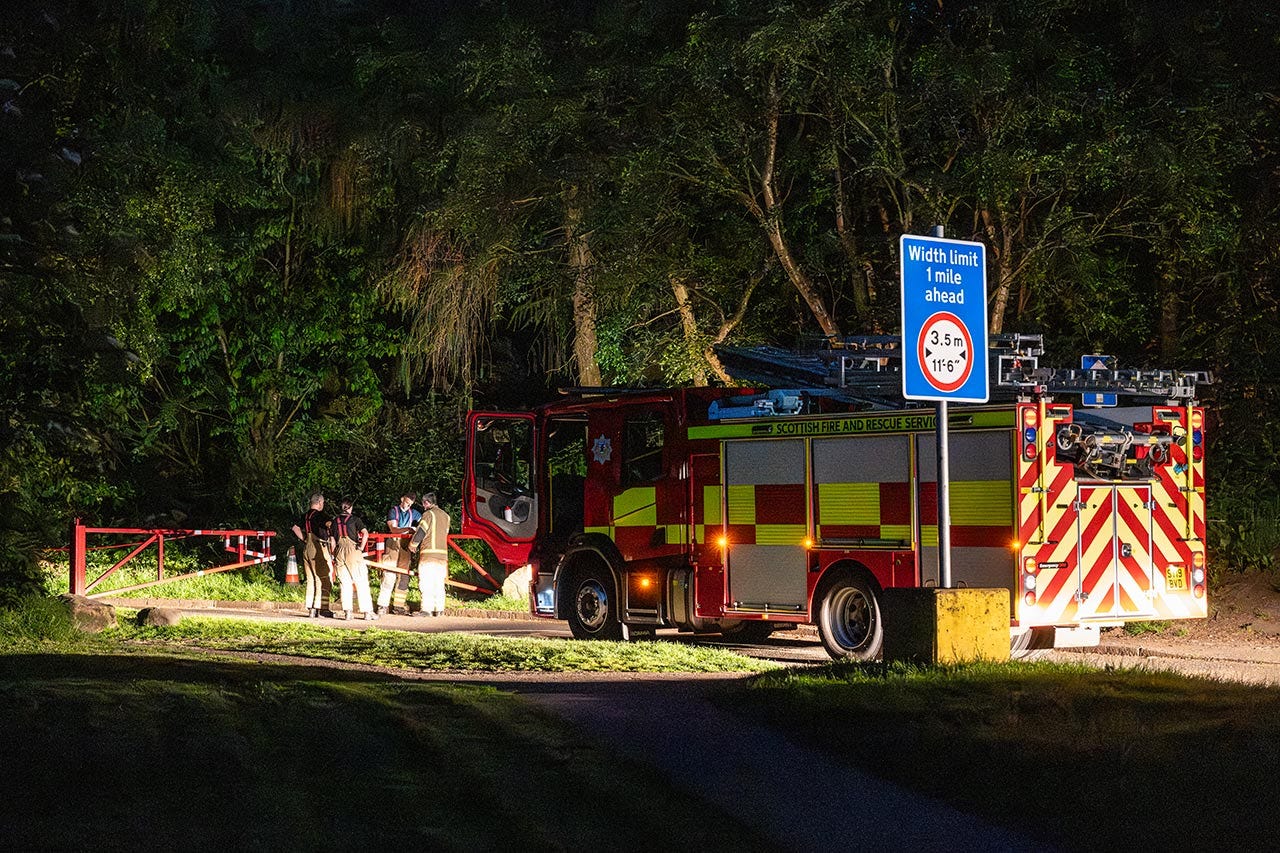
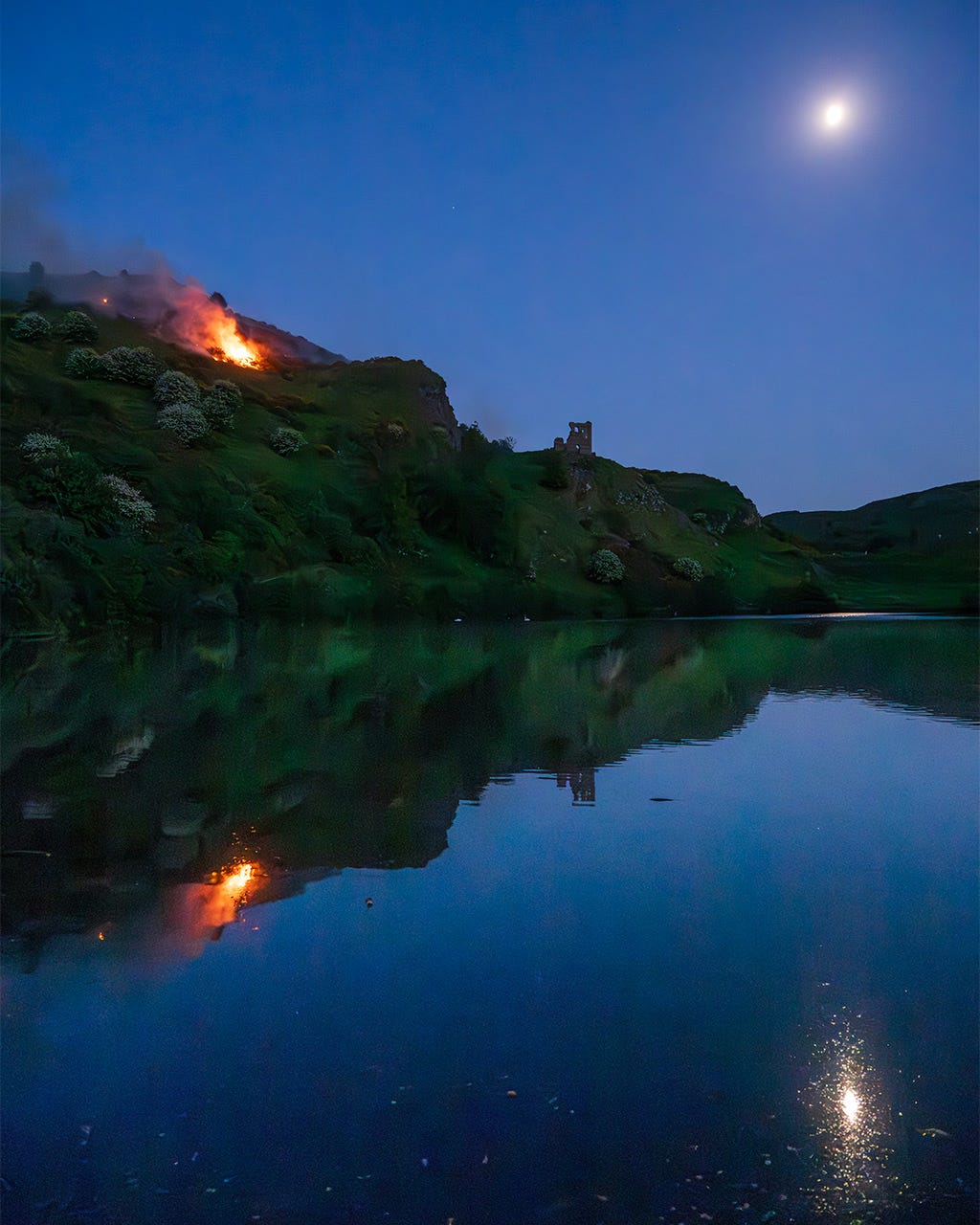
Arthur's Seat wildfire.....again

My newsletter has fresh weekly photo stories of Edinburgh & beyond sent direct by email if you subscribe - free if you choose or pay a wee bit to give me a regular pat on the back, and get freebies, discounts and access to live Zoom sessions.
You suggested I add a wee tips payment option - for when you don’t want, or can’t afford to subscribe but would like to offer something as a “Cheers mate, enjoyed that” gesture. So here is a link to do just that.
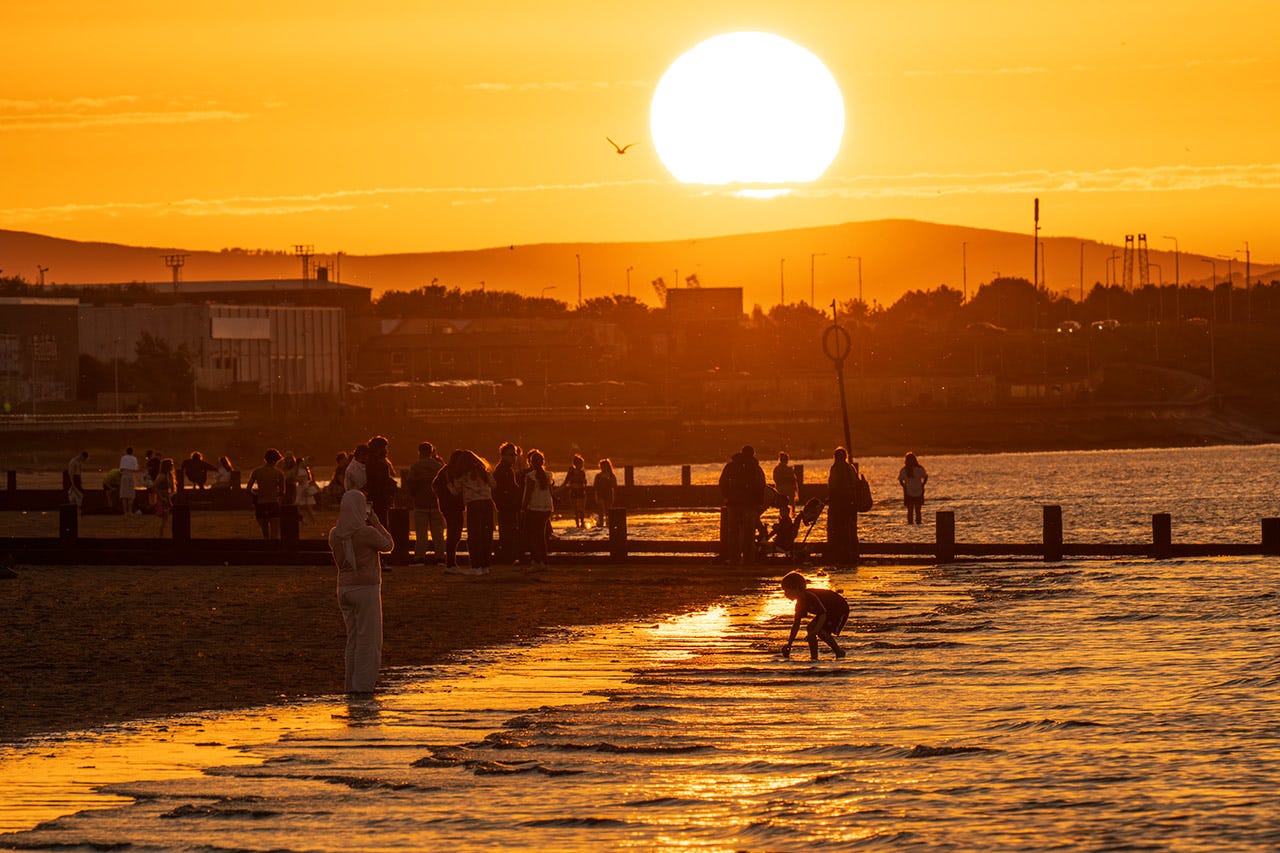
I missed the early conflagration at about 7.30pm yesterday but we could see the smoke from our Portobello sunset trip down at water’s edge.
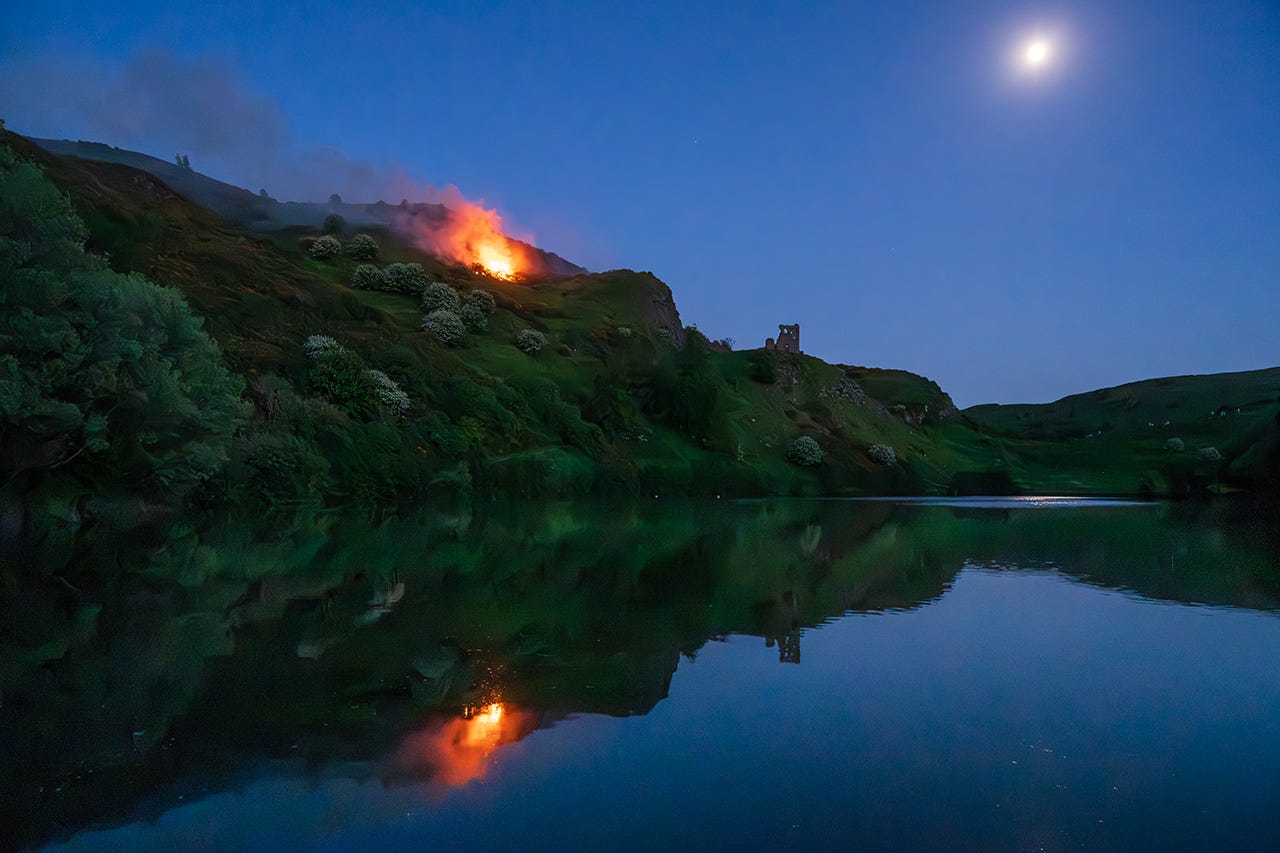
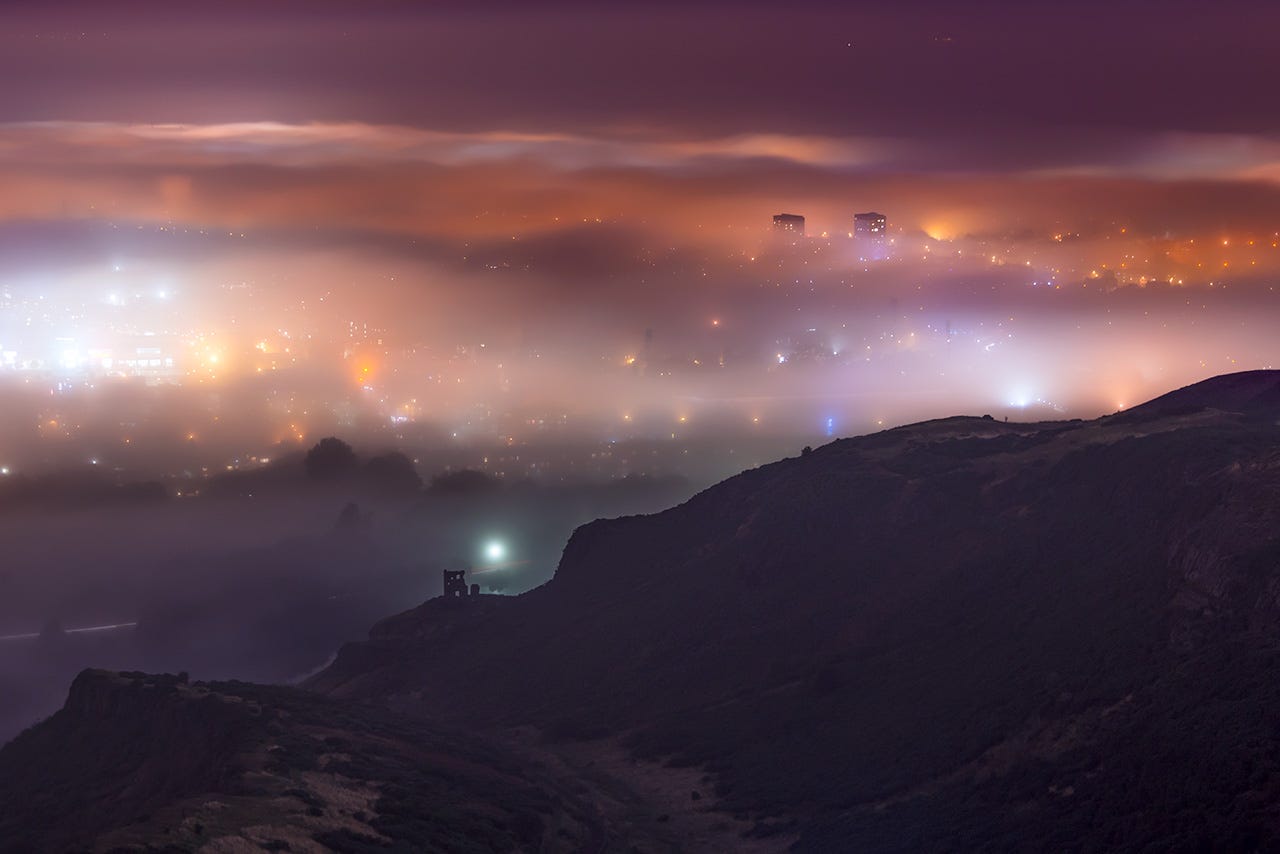
I nipped over around 11pm to check if it was still burning and got some images, with a helpful moon to add to the compositions.
St Anthony’s Chapel stands on a rocky shelf above St Margaret’s Loch and was there hundreds of years before the loch was constructed. It formed part of Prince Albert’s 1844 creation of Victoria Road, later renamed Queen’s Drive, this circuit of Arthur’s Seat was designed as a carriage ride for his wife Queen Victoria. This loch and Dunsapie Loch up the hill were created for watery interest during the circuit.
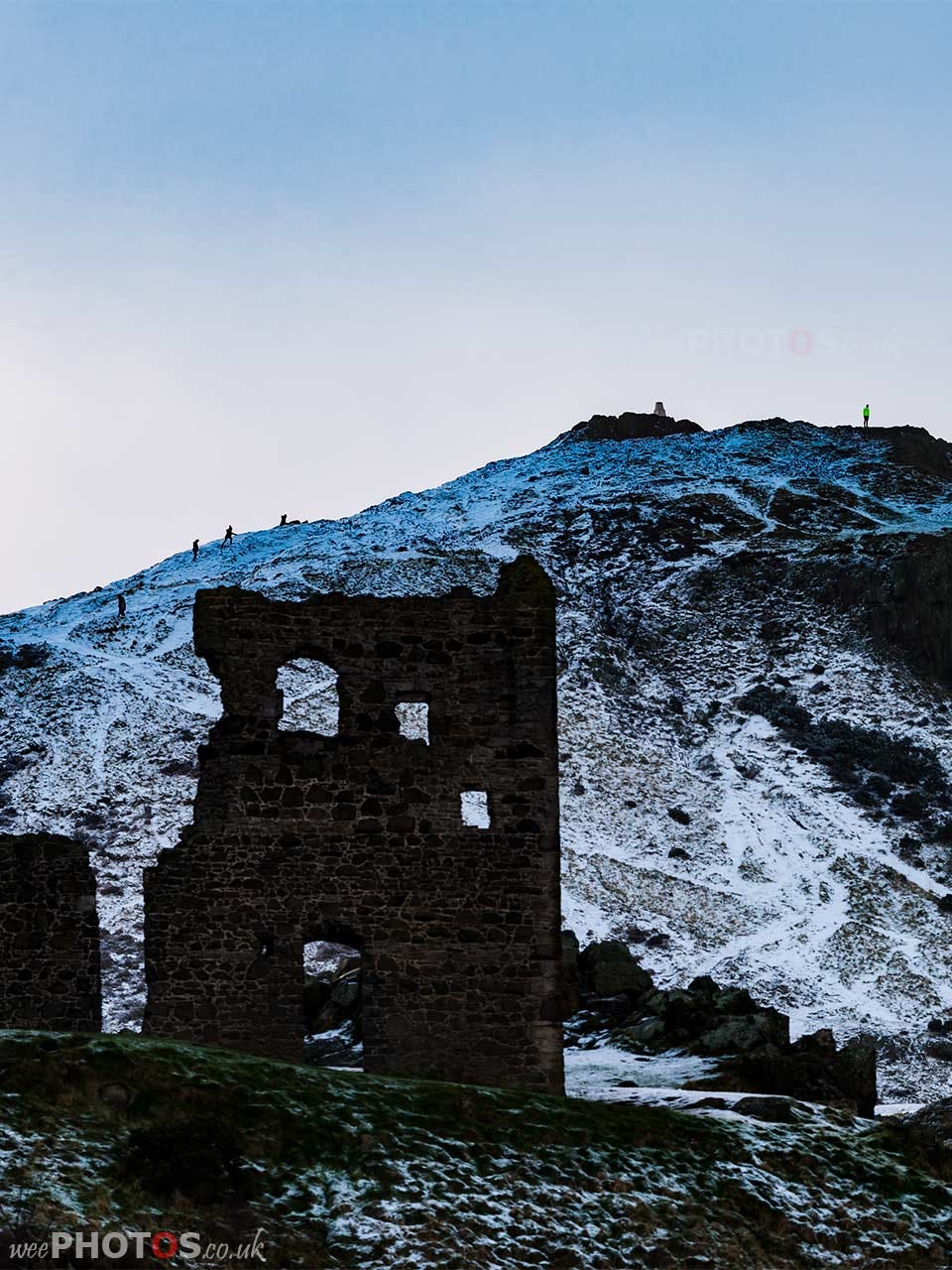
The chapel has been a ruin for a long time and its history is little known, except for some wee nuggets of clues. In 1420 the Pope paid for its repair which probably means it had been around for a good while before that. On the path below it there was a (now dry) spring that was a place of pilgrimage for those who sought relief from ailments, as well as the tradition of May 1st bringing many people to this well, and Arthur’s Seat in general. Bathing your faces in the morning dew was said to give you a clear and healthy complexion for the rest of the year.
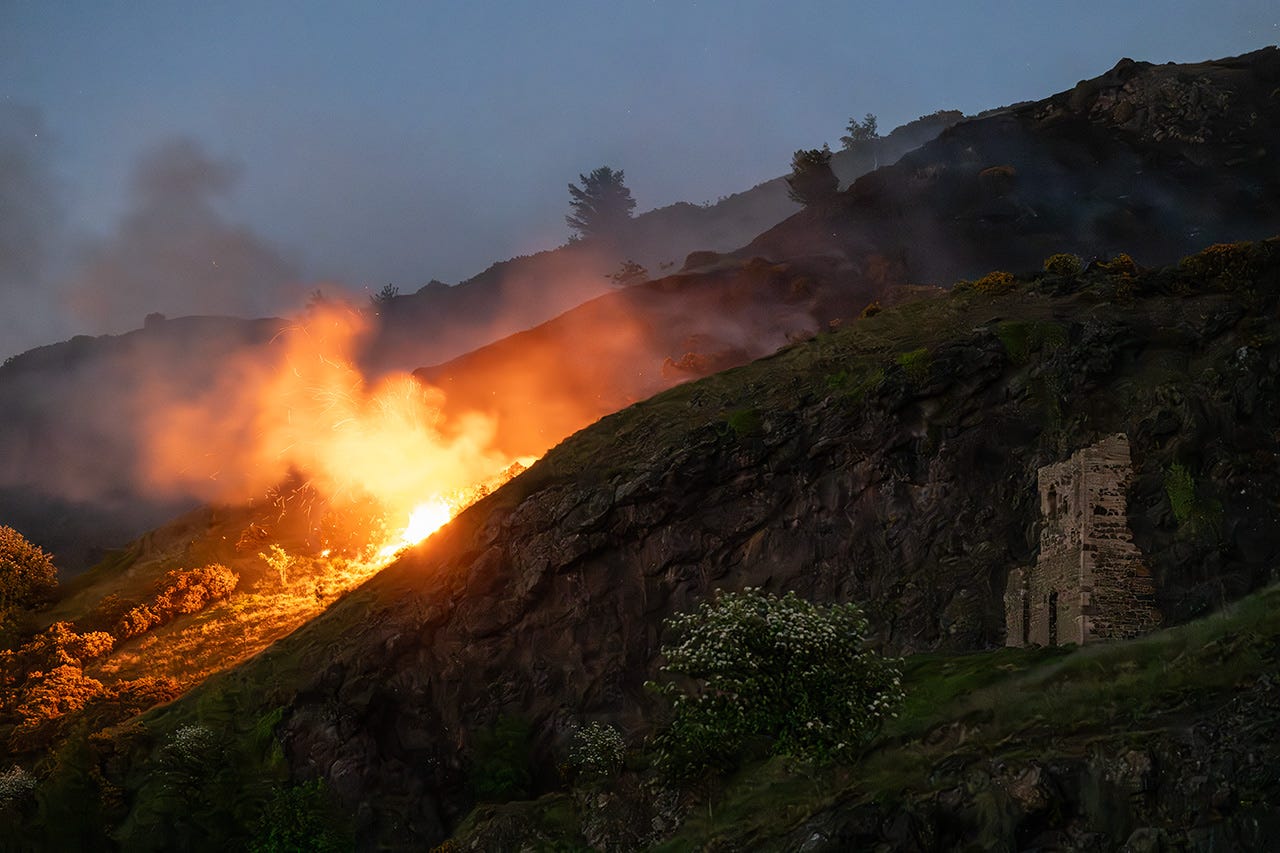
An intriguing clue is that St Anthony’s was closely linked with the Abbey of Holyrood just over the road, established in 1128, but probably also had connections with Preceptory of St Anthony in Leith. This was a skin hospital founded around 1430 with a speciality of treating the painful skin disease Erysipelas. Here’s the kicker - this disease was rife in 15th century Scotland & was widely known as….St Anthony’s Fire.
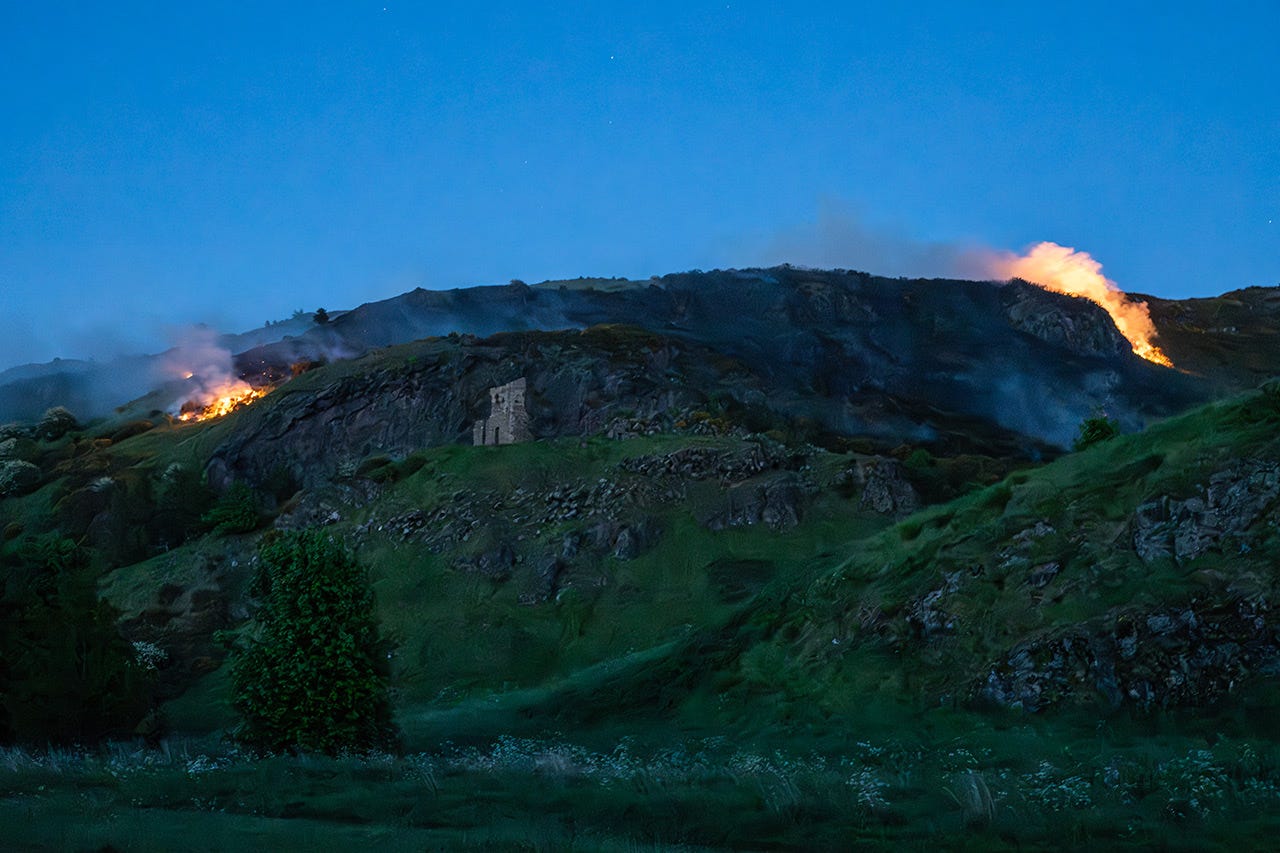
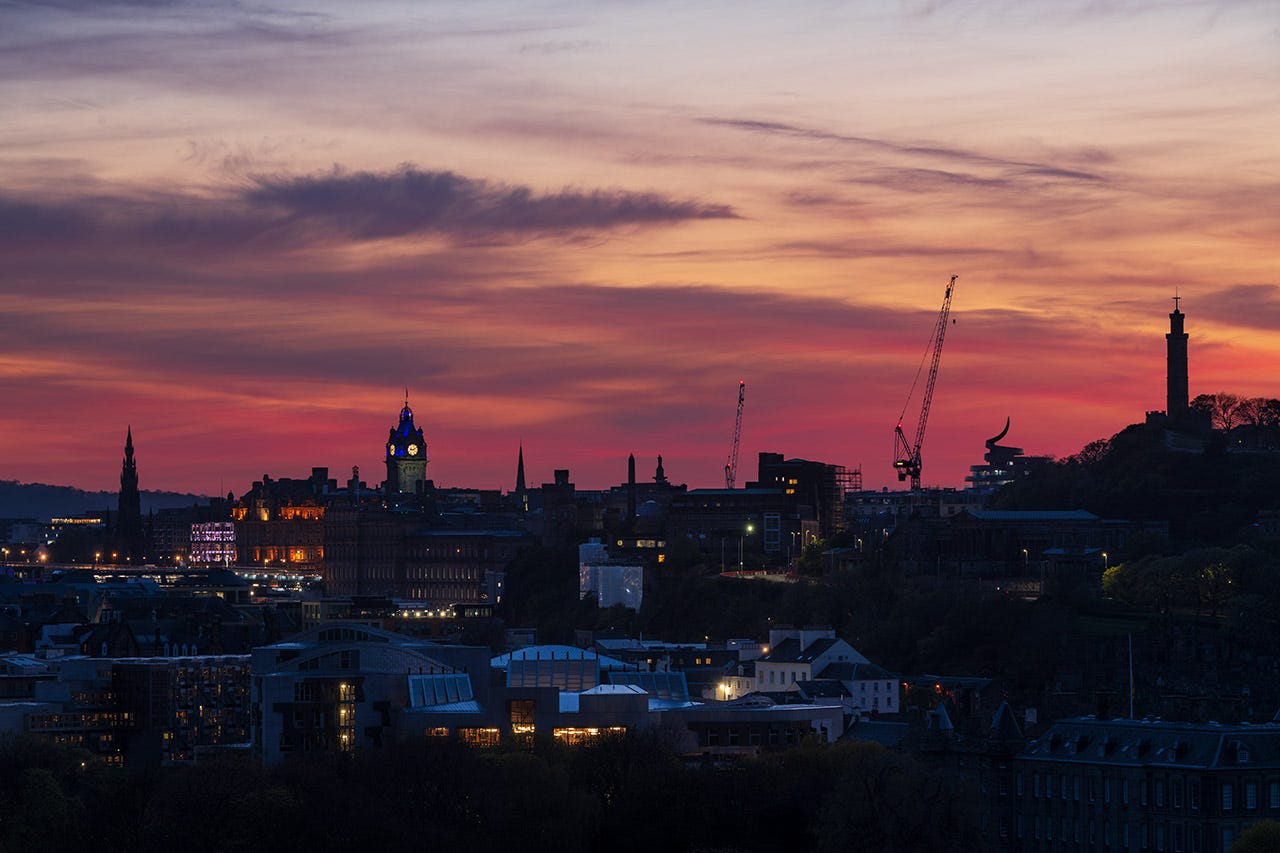
An interesting theory is that the chapel tower had a function as a fiery beacon signal tower to aid pilgrims arriving by sea to orientate themselves for the journey to the well a& the chapel. Get yourself up to this ruin and feel the vibes of 600 years of human use, whatever it happened to be, and you’ll also be rewarded with some of the best views of Edinburgh and Leith.
Enjoy the sun, while it lasts.
Maybe see you out there.
TD